In commercial real estate, everyone talks about choosing the right broker, lender, contractor, property manager, and title company.
But there is another person at the table who can have an enormous impact on whether a transaction moves smoothly toward closing or slowly starts coming apart:
the real estate attorney.
And not all real estate attorneys approach a deal the same way.
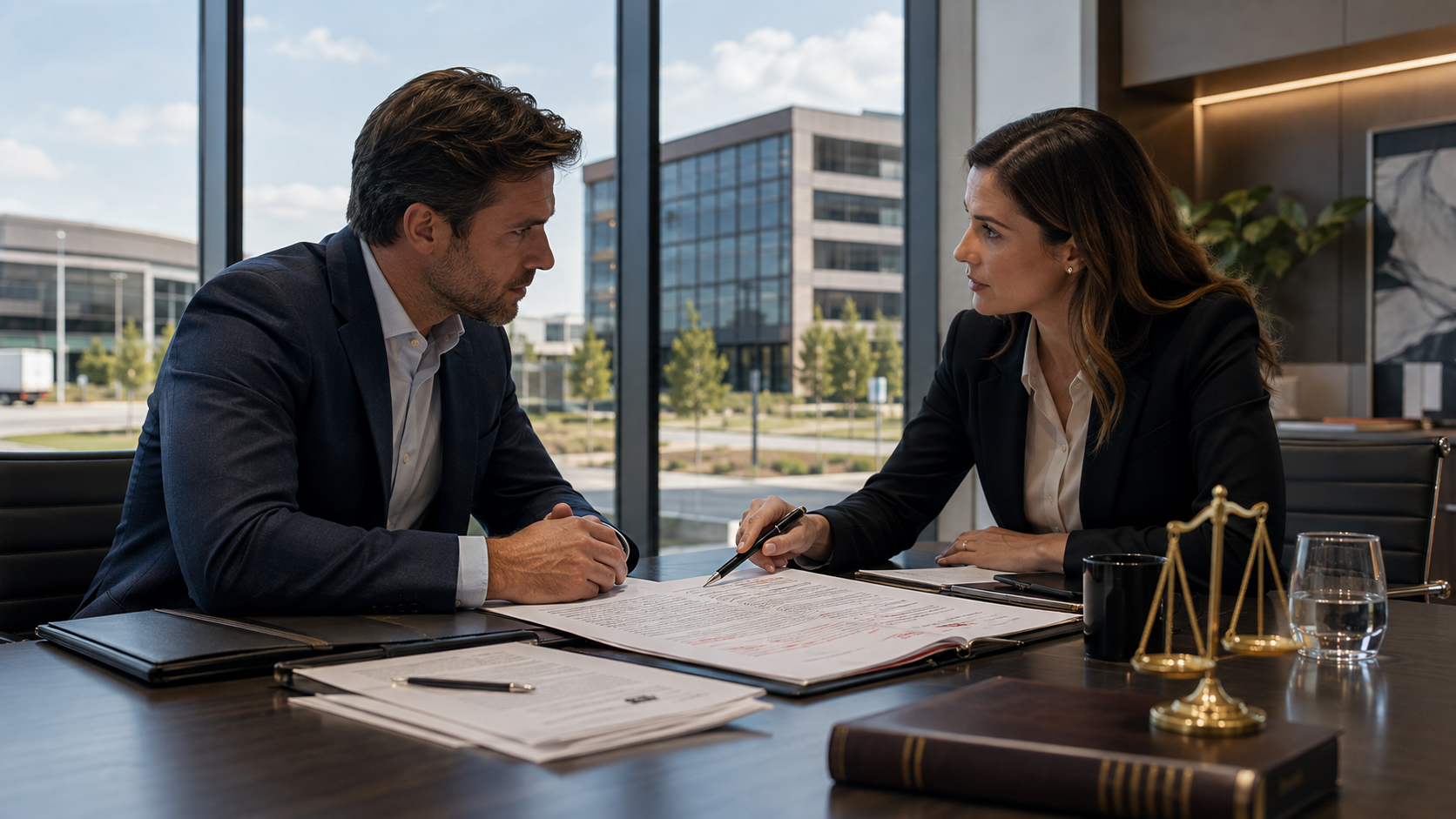
A good commercial real estate attorney understands that their job is to protect their client while still helping the transaction move forward. They identify legitimate risk, explain it clearly, negotiate the important points, document the agreement properly, and keep the process progressing.
A poor fit can do the exact opposite.
They can turn manageable issues into major disputes, reopen points the parties already agreed upon, bury simple business decisions under pages of legal language, create unnecessary rounds of revisions, and allow the transaction to become more complicated than the underlying deal ever needed to be.
Sometimes, by the time everyone realizes what is happening, the buyer and seller are no longer negotiating the property.
They are negotiating the attorneys.
The Best Attorneys Understand the Business Deal
Commercial real estate contracts are legal documents, but the transaction behind them is still a business deal.
There is a purchase price.
There are inspection periods.
There are financing requirements.
There may be leases, environmental concerns, title issues, easements, zoning questions, tenant obligations, repair responsibilities, closing conditions, or dozens of other considerations.
The attorney absolutely needs to identify legal exposure.
But the best attorneys also understand the difference between a genuine problem and a problem that can simply be solved.
That distinction matters.
An experienced deal attorney may say:
“This provision creates exposure for my client. Here is the risk, and here are two ways we can resolve it.”
That keeps the transaction moving.
A different attorney may spend several days exchanging redlines over language that has little practical impact on either party.
The legal bill grows.
The frustration grows.
And the deal does not move.
Protection and Obstruction Are Not the Same Thing
Clients hire attorneys because they want protection.
They should.
Commercial real estate can involve substantial money and significant liability, and competent legal representation is often essential.
But aggressive representation should not be confused with unnecessarily adversarial representation.
There is a difference between protecting your client and trying to “win” every sentence in a contract.
Every additional demand has a consequence.
Every unnecessary revision creates another opportunity for disagreement.
Every delayed response costs momentum.
And commercial real estate transactions depend heavily on momentum.
Once a deal begins losing it, buyers start reconsidering.
Sellers become frustrated.
Lenders begin asking questions.
Inspection periods keep running.
Other opportunities appear.
What began as a straightforward transaction can suddenly feel exhausting.
That is how deals die.
The Attorney Should Understand the Goal
One of the most important conversations a client can have with their attorney at the beginning of a transaction is very simple:
What are we actually trying to accomplish?
Are we trying to close the transaction unless a serious issue appears?
Are there specific items that are non-negotiable?
What risks are acceptable?
Which issues genuinely threaten the client?
And which issues simply need to be documented properly?
Without that direction, legal negotiations can sometimes take on a life of their own.
The purpose of the contract is not to create the perfect theoretical document.
The purpose is to accurately protect the parties while allowing a viable transaction to close.
Some Attorneys Are Deal Makers. Others Are Deal Killers.
Anyone who has worked in commercial real estate long enough has encountered both.
The deal-making attorney is responsive.
They understand deadlines.
They communicate clearly.
They prioritize meaningful issues.
They propose solutions.
They know when to push and when a point simply is not worth jeopardizing the transaction.
Most importantly, they recognize that their client hired them to help accomplish a business objective—not to create unnecessary conflict.
The deal-killing attorney often approaches the transaction differently.
Every issue becomes a battle.
Every clause becomes a negotiation.
Every redline creates three more.
Communication slows down.
Business decisions become legal debates.
And eventually someone on the other side decides the transaction simply is not worth the aggravation anymore.
There are absolutely situations where an attorney should recommend walking away.
That is part of good representation.
But there is a substantial difference between identifying a deal-breaking problem and becoming the reason the deal breaks.
Choose Your Attorney the Same Way You Choose the Property
Before hiring counsel for a significant commercial transaction, ask questions.
Do they regularly handle commercial real estate transactions?
Do they represent buyers and sellers in deals similar to yours?
How do they approach contract negotiations?
Who will actually handle the file?
How quickly do they typically respond during active negotiations?
Do they understand that transaction timelines matter?
And perhaps most importantly:
Are they known for solving problems or creating them?
The cheapest attorney is not necessarily the best choice.
The most expensive attorney is not necessarily the best choice either.
You want someone who understands risk, understands commercial real estate, understands your objectives, and understands how to get a transaction across the finish line.
Because when millions of dollars, months of negotiation, inspections, financing, leases, and business plans are tied to a single transaction, the wrong attorney can become an extraordinarily expensive mistake.
The Bottom Line
Commercial real estate deals are rarely perfect.
Problems arise.
Contracts change.
Due diligence uncovers surprises.
Buyers and sellers disagree.
That is normal.
The professionals surrounding the transaction determine what happens next.
The right attorney can take a difficult issue, protect their client, negotiate a reasonable solution, and keep everyone moving toward closing.
The wrong one can take a perfectly manageable deal and turn it into a war of attrition.
Choose wisely.
Because in commercial real estate, your attorney should be protecting the deal.
Not becoming the biggest obstacle to closing it.